Introduction: The Edible Matters But Perhaps Not in the Way Most People Think

Walk into any modern psychedelic marketplace, and you’ll notice something interesting.
Magic mushrooms are no longer discussed only in their dried form.
Today, many people are comparing mushroom gummies vs mushroom chocolate, asking questions like:
- Which one feels stronger?
- Which kicks in faster?
- Which lasts longer?
- Which tastes better?
- Which offers more consistent dosing?
- Which is better for beginners?
On the surface, these seem like straightforward product comparisons.
In reality, they’re questions about biology, formulation, digestion, expectations, and personal preference.
Many people assume that if two products contain an equivalent amount of psilocybin, they should produce identical experiences. Current research and practical experience suggest the picture is more nuanced. The active compound may be the same, but the delivery format, the ingredients surrounding it, individual metabolism, recent food intake, and other factors can all influence how a person perceives the onset and overall experience.
That does not mean one edible is universally “better.”
Instead, each format offers different characteristics that may appeal to different users and situations.
This guide explores mushroom gummies vs mushroom chocolate from an educational perspective, examining potency, onset time, consistency, convenience, storage, and other practical considerations while separating evidence from common misconceptions.
Why Edible Formats Have Become So Popular
Not long ago, most people associated psilocybin with dried mushrooms.
Today, edible products have become increasingly common.
There are several reasons for this shift.
Many consumers appreciate products that:
- Have a familiar appearance
- Mask the earthy taste of dried mushrooms
- Are easier to portion
- Feel more approachable for first-time users
- Offer convenient storage and transport
Chocolate bars and gummies have become two of the most recognizable edible formats.
Although they serve a similar purpose—delivering psilocybin in an edible product—they differ in formulation, texture, ingredients, and the overall user experience.
Understanding those differences helps consumers make more informed decisions rather than relying on marketing claims alone.
The First Myth: Potency Depends Entirely on the Product
One of the biggest misconceptions surrounding edible psilocybin products is that chocolate is automatically stronger than gummies—or vice versa.
Current evidence does not support such a universal rule.
The primary determinant of potency is how much active psilocybin is present, not whether it is delivered in chocolate or a gummy.
If two products genuinely contain equivalent amounts of psilocybin and are manufactured consistently, the psychoactive compound itself remains the same.
However, consumers often perceive differences because several other variables influence the overall experience, including:
- Product formulation
- Digestion
- Food consumed beforehand
- Individual metabolism
- Manufacturing consistency
- Storage conditions
- Psychological expectations
These variables help explain why two edible products with similar labelled amounts may feel different to different people.
Potency Is More Than a Number
When people talk about potency, they often mean:
“How strong will this feel?”
Researchers tend to think more broadly.
Potency can involve:
- Concentration of active compounds
- Consistency between servings
- Stability over time
- Bioavailability
- Individual sensitivity
Two products labelled with the same amount of psilocybin may still produce different subjective experiences because human biology is highly variable.
This is one reason researchers emphasize controlled manufacturing and standardized preparations when conducting clinical studies.
The National Center for Complementary and Integrative Health (NCCIH) notes that responses to psilocybin vary considerably between individuals and are influenced by factors extending beyond dosage alone.
Mushroom Chocolate: Why It Became So Popular
Chocolate has a long history as a premium edible format.
Its popularity extends beyond psychedelics.
Chocolate offers several practical advantages:
- Pleasant taste
- Familiar texture
- Easy portioning
- Good shelf stability when stored properly
- Broad consumer acceptance
Many manufacturers use scored chocolate bars that divide into equal squares, allowing consistent serving sizes.
For many people, chocolate also masks the earthy flavor of mushrooms more effectively than dried material alone.
This has helped make mushroom chocolate one of the most recognizable edible products on the market.
Mushroom Gummies: A Different Kind of Convenience
Gummies have followed a similar path.
Consumers already associate gummies with vitamins, supplements, and functional wellness products.
That familiarity makes them approachable.
Potential advantages include:
- Individually portioned servings
- Portable packaging
- Consistent texture
- Wide variety of flavors
- No need to divide pieces manually
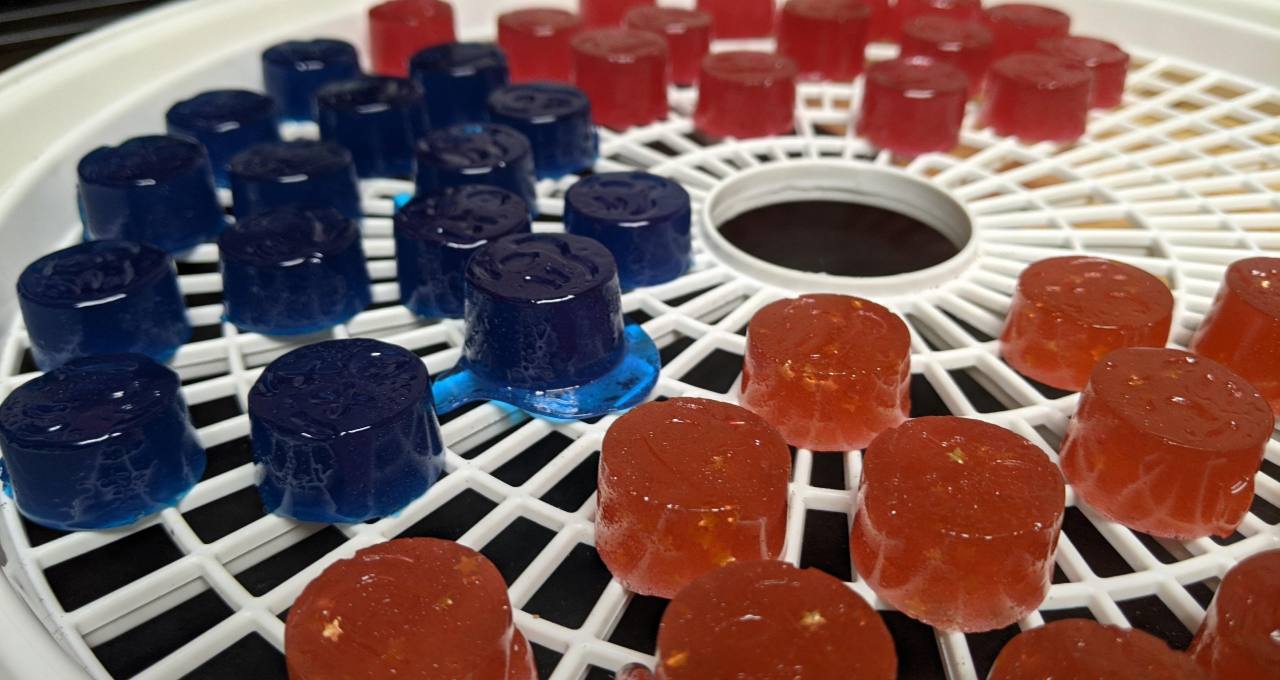
Because gummies are manufactured as individual units, many consumers appreciate the simplicity of counting servings rather than breaking chocolate squares.
As with any edible product, however, consistency ultimately depends on manufacturing quality rather than format alone.
Does Chocolate Absorb Faster Than Gummies?
This is one of the most frequently asked questions.
The honest answer is:
It depends.
Both chocolate and gummies are oral edible products.
After consumption, the active compounds must pass through digestion before entering circulation.
Factors that may influence perceived onset include:
- Whether food has been eaten recently
- Individual digestive speed
- Product formulation
- Fat content
- Sugar content
- Personal metabolism
- Overall health
Chocolate contains fat, while gummies are generally gelatin- or pectin-based with different ingredient profiles.
These differences may influence digestion, but there is currently insufficient evidence to conclude that one edible format consistently produces faster onset across all individuals.
Researchers continue investigating how formulation influences drug absorption across many oral medications and edible products.
Why One Person’s “Fast” Is Another Person’s “Slow”
Human digestion varies enormously.
Someone who reports effects beginning within thirty minutes may have:
- An empty stomach
- Faster gastric emptying
- Different metabolic activity
- Different previous meals
Someone else may not notice effects until considerably later despite consuming the same product.
This is one reason responsible educational resources avoid promising exact onset times.
Instead of expecting a fixed timeline, it’s more accurate to recognize that onset varies between individuals.
Taste Shapes Expectations More Than People Realize
Flavor may seem unrelated to psychedelic experiences.
Psychology suggests otherwise.
The sensory experience of eating something enjoyable can influence anticipation, comfort, and emotional readiness.
Chocolate often feels:
- Familiar
- Comforting
- Indulgent
Gummies often feel:
- Light
- Convenient
- Casual
- Approachable
These emotional associations do not change the chemistry of psilocybin.
However, expectations influence subjective experiences across many areas of medicine and psychology.
Someone who feels relaxed before consumption may approach the experience differently than someone feeling anxious or uncertain.
Manufacturing Quality Matters More Than Format
One factor receives surprisingly little attention in online comparisons:
Manufacturing standards.
Whether choosing gummies or chocolate, product quality depends heavily on:
- Ingredient sourcing
- Mixing consistency
- Batch testing
- Accurate formulation
- Storage conditions
- Packaging quality
A carefully manufactured gummy may provide more consistent serving sizes than a poorly produced chocolate bar.
Likewise, a professionally formulated chocolate product may outperform an inconsistently manufactured gummy.
The edible format alone cannot predict quality.
Why Consistency Is Important
Clinical research depends upon consistency.
Researchers studying psilocybin need confidence that participants receive standardized preparations.
Consistency helps reduce uncertainty by minimizing variation between servings.
Consumers similarly value products that provide predictable serving sizes rather than large differences between individual pieces.
Although manufacturing methods vary considerably between producers, consistency remains one of the most important indicators of product quality regardless of edible format.
Convenience Is Different for Different People
Convenience is surprisingly personal.
Some people prefer chocolate because:
- It feels like a familiar treat.
- Portions can often be divided.
- It stores well under suitable conditions.
Others prefer gummies because:
- Individual pieces are easy to count.
- No breaking is required.
- Flavors are often fruit-based.
- Packaging may be compact.
Neither preference is objectively superior.
Instead, convenience depends on individual lifestyle and personal priorities.
Choosing Between Gummies and Chocolate Starts With the Right Questions
Rather than asking:
“Which is better?”
It may be more helpful to ask:
- Do I value portioned servings individually?
- Am I sensitive to certain flavors or textures?
- Is storage an important consideration?
- Am I looking for convenience during travel?
- How important is product consistency?
The answers often reveal that personal preference plays a larger role than many online comparisons suggest.
Does One Edible Last Longer Than the Other?
A common assumption is that chocolate creates a longer-lasting experience while gummies produce a shorter one.
The available evidence doesn’t support such a simple conclusion.
Once psilocybin has been absorbed and converted into psilocin, the body processes the active compound through the same biological pathways regardless of whether it arrived in chocolate, a gummy, or another edible formulation.
What often changes is when people begin noticing effects—not necessarily how long those effects continue.
Several factors can influence the overall timeline, including:
- Individual metabolism
- Digestive speed
- Recent meals
- Product formulation
- General health
- Sleep
- Hydration
- Psychological state
This helps explain why two people eating the same chocolate bar—or even two pieces from the same bar—may describe different timelines.
Rather than thinking in terms of “gummies last longer” or “chocolate lasts longer,” it’s more accurate to understand duration as the result of several interacting biological and environmental factors.
Digestion Plays a Bigger Role Than Most People Realize
Unlike inhaled substances, edible products must pass through the digestive system before their active compounds enter circulation.
This makes digestion one of the biggest variables affecting onset.
Researchers studying oral medications have long recognized that digestion differs substantially between individuals.
Factors influencing digestion include:
- Meal size
- Fat content
- Gastric emptying
- Physical activity
- Age
- Stress
- Hormonal factors
- Overall digestive health
Someone eating chocolate after a large meal may notice a different onset than someone eating gummies on a relatively empty stomach.
That difference does not necessarily come from the edible itself.
It often comes from the digestive system processing the edible under different conditions.
The “Empty Stomach” Conversation Is More Nuanced Than It Sounds
Many online discussions suggest that consuming edibles on an empty stomach automatically produces stronger or faster effects.
Reality is more complicated.
Current research does not establish one universal rule that applies to everyone.
Eating before consuming an edible may influence:
- Gastric emptying
- Digestive speed
- Comfort
- Nausea
- Overall experience
Some people report greater stomach comfort after eating a light meal.
Others notice little difference.
Because responses vary, responsible educational resources generally avoid presenting any single eating strategy as universally correct.
The important point is recognizing that food influences digestion—and digestion influences onset.
Chocolate Contains More Than Chocolate
Chocolate is a surprisingly complex food.
Depending on the formulation, it may contain:
- Cocoa solids
- Cocoa butter
- Milk solids
- Sugar
- Lecithin
- Flavorings
Dark chocolate generally contains higher concentrations of cocoa solids than milk chocolate.
These ingredients influence flavor, texture, and mouthfeel.
However, there is currently little evidence demonstrating that ordinary differences in chocolate composition consistently produce meaningful differences in psilocybin potency.
Consumers sometimes attribute stronger experiences to darker chocolate because it feels richer or more “premium.”
Psychology reminds us that expectations can influence perception just as much as ingredients themselves.
Gummies Are Also More Complex Than They Appear
Many people imagine gummies as simple fruit-flavored sweets.
In reality, formulations vary considerably.
Common ingredients include:
- Gelatin or pectin
- Sugar
- Organic acids
- Fruit concentrates
- Natural flavorings
- Stabilizers
Manufacturers use different recipes, meaning texture and consistency vary between brands.
Again, these differences may influence the eating experience without necessarily changing the pharmacology of psilocybin itself.
Expectations Can Shape Perceived Potency
Imagine two identical products.
One arrives in elegant premium chocolate packaging.
The other comes in a brightly colored gummy pouch.
Even before opening either package, expectations begin forming.
Psychologists call this an expectancy effect.
Across medicine and psychology, expectations influence:
- Attention
- Emotional interpretation
- Symptom perception
- Confidence
- Anxiety
Researchers have demonstrated that expectation can meaningfully influence subjective experiences across many therapeutic settings.
Psychedelics appear to be no exception.
This does not mean psilocybin’s effects are “all in the mind.”
Rather, expectations become one of many factors interacting with pharmacology.
Someone expecting chocolate to feel smoother may interpret their experience differently than someone convinced gummies are stronger.
The chemistry may be similar.
The interpretation may not be.
Packaging Can Influence Trust
Packaging rarely appears in scientific discussions.
Yet consumer psychology suggests presentation influences confidence.
Professional packaging may communicate:
- Consistency
- Quality
- Reliability
- Careful manufacturing
Poor packaging may create uncertainty before consumption even begins.
Although packaging does not change psilocybin chemistry, confidence can influence emotional readiness.
Feeling reassured is different from feeling uncertain.
Those emotional differences may become noticeable during a psychedelic experience.
Storage Conditions Matter More Than Many Comparisons Suggest
Consumers often focus on choosing between chocolate and gummies while overlooking storage.
Environmental conditions may influence product quality over time.
Important considerations include:
- Heat
- Humidity
- Light exposure
- Oxygen
- Packaging integrity
Chocolate stored in excessive heat may soften or bloom.
Gummies exposed to moisture may change texture.
Proper storage helps preserve product quality regardless of edible format.
Following the manufacturer’s storage recommendations is generally the best approach.
Why Standardization Matters in Research
Clinical researchers rarely compare homemade edible products.
Instead, they prioritize standardized preparations.
Standardization helps ensure participants receive consistent quantities of active compounds.
Without standardization, researchers cannot confidently interpret results because differences between products introduce unnecessary uncertainty.
This emphasis on consistency reflects one of the biggest lessons from modern psychedelic research:
Reliable information depends upon reliable products.
The National Institutes of Health (NIH) maintains extensive research discussing standardized psychedelic investigations and ongoing clinical studies.
Convenience Depends on Lifestyle
People often ask which edible is “better.”
A more useful question may be:
“Better for whom?”
Someone frequently travelling may prioritize:
- Compact packaging
- Individual servings
- Easy portability
Someone sharing a product among several adults may prefer a scored chocolate bar that can be divided into equal pieces.
Someone particularly sensitive to certain textures may simply enjoy one format more than another.
These practical considerations often influence satisfaction more than subtle formulation differences.
Product Preference Is Personal
Food preferences differ enormously.
Some people dislike chocolate.
Others dislike gummies.
Some enjoy fruity flavors.
Others prefer richer cocoa notes.
These preferences seem unrelated to psychedelics.
In reality, comfort influences mindset.
Choosing an edible someone genuinely enjoys may reduce unnecessary distractions and improve the overall eating experience.
Again, this does not make one edible pharmacologically stronger.
It simply recognizes that human experiences involve psychology alongside chemistry.
Why There Is No Universal “Best” Psilocybin Edible
By this point, one conclusion becomes increasingly clear.
There is no universally superior edible.
Instead, there are trade-offs.
Chocolate may appeal to consumers seeking:
- Familiar texture
- Premium presentation
- Divisible portions
Gummies may appeal to consumers seeking:
- Individually portioned servings
- Fruit flavors
- Convenience
- Portable packaging
Quality depends far more on careful formulation, manufacturing consistency, and responsible storage than on edible format alone.
The comparison between mushroom gummies vs mushroom chocolate is therefore less about declaring a winner and more about understanding which characteristics matter most to each individual.
The Biggest Mistake People Make When Comparing Psilocybin Edibles
One of the most common mistakes is assuming the edible format alone determines the experience.
People often ask:
“Will chocolate give me a smoother trip?”
“Are gummies stronger?”
“Does chocolate hit faster?”
The better question is:
“What other factors are influencing the experience?”
Scientific research consistently reminds us that psychedelic experiences are highly individualized.
Even if two products contain equivalent amounts of psilocybin, differences may arise because of:
- Personal metabolism
- Digestive health
- Recent meals
- Body chemistry
- Sleep quality
- Stress levels
- Psychological expectations
- Previous psychedelic experience
- The environment where the experience takes place
In other words, comparing mushroom gummies vs mushroom chocolate without considering the person consuming them oversimplifies a much more complex picture.
Potency Is Not the Same as Intensity
Another misconception is that potency and intensity mean the same thing.
They don’t.
A product’s potency refers to the amount of active compound it contains.
Intensity describes how an individual experiences that compound.
Those are two different concepts.
For example:
A carefully manufactured chocolate product and an equally standardized gummy may contain similar amounts of psilocybin.
Yet one person might describe one as feeling “stronger.”
That doesn’t necessarily mean it contained more psilocybin.
Instead, it may reflect differences in:
- Absorption
- Expectations
- Mood
- Setting
- Personal sensitivity
This distinction helps explain why user reviews often appear contradictory.
Two people can honestly report completely different experiences with similar products.
Why Product Quality Deserves More Attention Than Product Type
The conversation around edibles often becomes:
Chocolate versus gummies.
In reality, a more important comparison is:
High-quality products versus poorly manufactured products.
Reliable manufacturers typically prioritize:
- Ingredient quality
- Consistent formulation
- Accurate serving sizes
- Stable packaging
- Proper storage guidance
- Batch consistency
These factors contribute more to a predictable product than whether the edible is made from chocolate or fruit-flavoured ingredients.
Quality should always come before novelty.
Marketing Can Create Expectations That Reality Doesn’t Always Match
The psychedelic industry continues to evolve.
As more edible products become available, marketing language has become increasingly creative.
Consumers may encounter phrases such as:
- Extra strength
- Premium blend
- Fast acting
- Enhanced formula
- Maximum potency
These descriptions don’t always communicate meaningful scientific differences.
Rather than relying on marketing alone, it’s worth asking:
- Is the formulation transparent?
- Are serving sizes clearly labelled?
- Does the manufacturer provide educational information?
- Are storage recommendations included?
- Does the company emphasize responsible use rather than exaggerated claims?
Responsible education often says more about a company than dramatic advertising.
Choosing Between Mushroom Gummies and Mushroom Chocolate
Instead of searching for a universal winner, it may be more helpful to consider practical preferences.
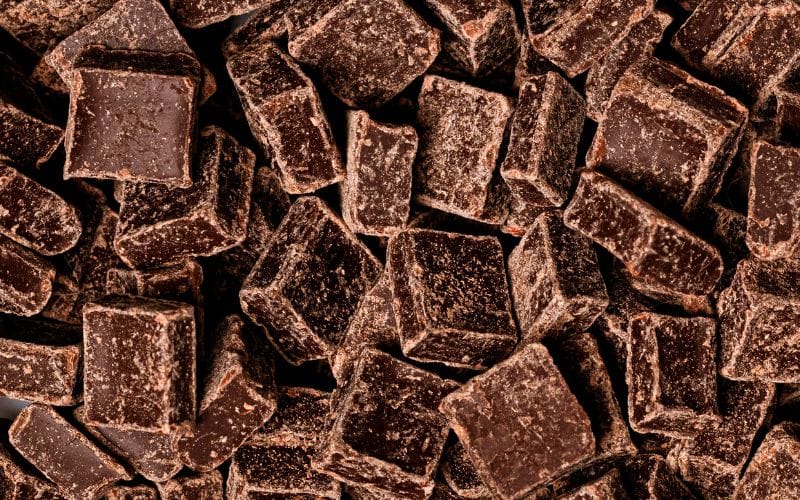
Mushroom Chocolate may appeal to people who prefer:
- Rich cocoa flavour
- Familiar chocolate texture
- Easily divided portions
- Traditional edible presentation
Mushroom Gummies may appeal to people who prefer:
- Fruity flavours
- Individual serving pieces
- Portable packaging
- Simple portion counting
Neither format is inherently superior.
The best choice depends on individual preferences, product quality, and personal priorities.
Common Myths About Mushroom Gummies vs Mushroom Chocolate
Myth 1: Chocolate Is Always Stronger
Current evidence does not support this.
Potency depends primarily on formulation and the amount of active psilocybin—not whether the edible is chocolate.
Myth 2: Gummies Always Work Faster
Not necessarily.
Digestion varies considerably between individuals.
Recent meals, metabolism, and formulation all influence onset.
Myth 3: Chocolate Produces a Better Experience
Experiences are highly individual.
Psychological expectations, environment, and biology often influence subjective effects more than edible format.
Myth 4: Gummies Are Only for Beginners
Edible preference has little to do with experience level.
Consumers choose products for many reasons, including taste, convenience, consistency, and portability.
Myth 5: Every Product Feels the Same
Even products containing similar labelled amounts may feel different because manufacturing methods, ingredients, storage conditions, and individual biology vary.
Frequently Asked Questions
Which tastes better: mushroom gummies or mushroom chocolate?
Taste is entirely subjective.
Many people prefer chocolate because it masks earthy flavours well, while others enjoy fruit-flavoured gummies.
Which is easier to portion?
Many gummies come as individually portioned pieces, while chocolate bars are often divided into scored squares.
The ease of portioning depends on the specific product.
Does food affect edible experiences?
Food may influence digestion and the timing of onset.
Responses vary considerably between individuals.
Does chocolate preserve psilocybin better than gummies?
Proper storage is generally more important than edible format.
Following manufacturer storage recommendations helps maintain product quality.
Why do people report different experiences with similar products?
Differences in biology, digestion, mindset, environment, expectations, and previous experiences all contribute to individual variation.
Continue Your Education
Learning about edible products is only one part of understanding psilocybin.
If you’re exploring the topic further, you may also find these educational guides helpful:
These articles explore preparation, expectations, and the many personal factors that influence psychedelic experiences beyond the product itself.
Final Thoughts: Choosing Knowledge Over Hype
The discussion around mushroom gummies vs mushroom chocolate often focuses on finding the “best” edible. Yet one of the most valuable lessons from modern psychedelic research is that there is rarely a single answer that applies to everyone.
Chocolate and gummies are simply two different delivery formats for the same active compound. While ingredients, formulation, digestion, and manufacturing quality may influence how a product is experienced, no current evidence shows that one edible format is universally stronger, faster, or better than the other.
What matters far more is understanding the broader picture. Individual biology, metabolism, expectations, emotional state, and environment all contribute to how a psychedelic experience unfolds. Recognizing these variables encourages more realistic expectations and helps people avoid relying on oversimplified marketing claims or anecdotal comparisons.
At the same time, product quality should never be overlooked. Consistent manufacturing, transparent labelling, proper storage, and responsible education provide a stronger foundation than choosing one edible format over another.
As research into psilocybin continues to evolve, the conversation is shifting away from simple comparisons and toward a more complete understanding of how psychedelic experiences are shaped. The most informed decisions come not from asking “Which edible is strongest?” but from asking “What factors are most likely to influence my experience?”
Approaching that question with curiosity, evidence, and realistic expectations is far more valuable than chasing universal answers.