Introduction
If you’ve spent time reading personal accounts of psilocybin experiences, you’ve probably noticed an interesting contradiction.
Two people can describe taking what appears to be the same dose under similar circumstances, yet their stories sound as though they belong to entirely different worlds.
One person speaks about overwhelming gratitude, emotional clarity, and a renewed appreciation for life. Another remembers confronting unresolved fears, revisiting painful memories, or simply feeling physically uncomfortable without experiencing the profound insights they expected. Others report surprisingly subtle effects, wondering whether anything significant happened at all.
These differences often lead people to ask an understandable question:
How can the same amount of psilocybin produce such different experiences?
The answer is more complex than dosage alone.
Modern psychedelic research increasingly suggests that the effects of psilocybin emerge through the interaction of biology, psychology, personal history, environment, expectations, and countless smaller variables that rarely receive the same attention as dosage. In other words, the mushroom may be the catalyst, but it is not the only author of the experience.
Understanding why psilocybin experiences differ is important for more than scientific curiosity. It helps replace unrealistic expectations with a more accurate understanding of how psychedelic experiences unfold, encouraging thoughtful interpretation instead of comparison.
Rather than searching for a single explanation, this article explores the many influences that shape individual experiences and why no two journeys should be expected to follow the same path.
Why the “Same Dose, Same Experience” Myth Persists
People naturally assume that identical inputs should produce identical results.
That expectation makes sense in many areas of everyday life. The same recipe often produces the same meal, and many medications produce relatively predictable physiological effects when taken as prescribed.
Psilocybin doesn’t work quite like that.
While dosage certainly influences the intensity of an experience, it cannot determine what thoughts arise, which memories become emotionally significant, how sensations are interpreted, or whether a person feels calm, reflective, curious, or overwhelmed.
A psychedelic experience is not simply something that happens to a person. It develops through an ongoing interaction between the compound and the individual’s existing psychological and biological landscape.
That means two people may begin with the same amount of psilocybin while bringing entirely different circumstances into the experience.
Current research reflects this complexity. The National Center for Complementary and Integrative Health (NCCIH) notes that psilocybin’s effects vary considerably between individuals and that factors beyond the substance itself influence subjective experiences.
Every Brain Starts From a Different Place
No two brains are biologically identical.
Although humans share common neurological structures, differences exist in brain connectivity, neurotransmitter activity, genetics, emotional processing, and how individuals respond to stress.
Once consumed, psilocybin is converted into psilocin, which primarily interacts with serotonin receptors involved in perception, mood, and cognition. Researchers continue investigating why these interactions produce remarkably different subjective experiences from one person to another.
Current evidence suggests that individual biological variation may contribute to differences in:
- Emotional sensitivity
- Perception of time
- Visual experiences
- Cognitive flexibility
- Attention
- Memory retrieval
- Emotional regulation
Importantly, biology provides part of the explanation—not the entire story.
Two people with similar biological responses may still interpret identical sensations in completely different ways because interpretation depends on personal history as much as brain chemistry.
A Psychedelic Doesn’t Enter an Empty Mind
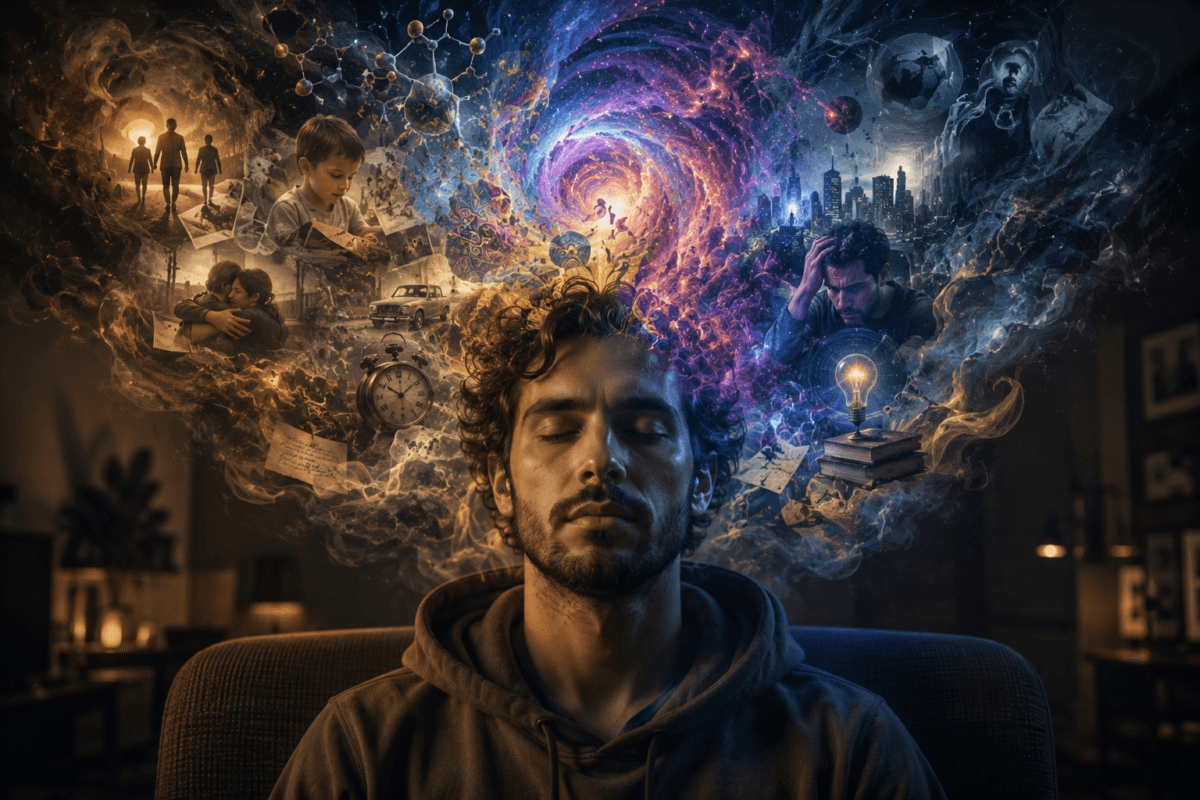
Long before psilocybin begins affecting perception, every individual arrives carrying a lifetime of experiences.
Some are obvious.
Others remain quietly in the background until something brings them into focus.
People enter psychedelic experiences with:
- personal beliefs
- cultural influences
- family history
- emotional memories
- unresolved questions
- recent stress
- hopes
- fears
- expectations
These factors don’t disappear once the experience begins.
Instead, they often become part of what the experience explores.
For one person, a particular song may evoke feelings of comfort.
For another, the same music may awaken grief connected to a forgotten memory.
Neither reaction is objectively correct.
Each reflects a different relationship between the external world and the person’s internal landscape.
This is one reason why psilocybin experiences differ even when external conditions appear nearly identical.
Set and Setting: More Than a Popular Phrase
Few concepts have shaped psychedelic research more than set and setting.
The phrase appears so frequently that it sometimes loses its meaning.
In reality, it describes two of the most important variables influencing psychedelic experiences.
Set refers to the internal conditions someone brings into the experience, including:
- Current mood
- Emotional wellbeing
- Personality
- Expectations
- Mental health
- Intentions
- Recent life events
Setting refers to the surrounding environment, including:
- Physical comfort
- Privacy
- Noise
- Lighting
- Familiarity
- Sense of safety
- Presence of trusted people
Researchers continue studying exactly how these factors interact with psilocybin, but modern clinical studies consistently emphasize careful preparation and supportive environments.
This does not guarantee a particular outcome.
Instead, it recognizes that people are more likely to engage openly with unfamiliar experiences when they feel psychologically and physically safe.
The Johns Hopkins Center for Psychedelic and Consciousness Research continues exploring how preparation, therapeutic support, and environment contribute to psychedelic research outcomes.
Expectations Quietly Shape Every Experience
Most people don’t approach psilocybin without expectations.
Those expectations may come from:
- documentaries
- podcasts
- friends
- online forums
- scientific articles
- popular culture
Some expect emotional healing.
Others expect mystical insight.
Some anticipate fear.
Others hope to solve long-standing personal questions.
Expectations don’t determine what happens, but they influence what people notice and how they interpret unfamiliar experiences.
Psychologists have long recognized that expectations affect attention and perception across many areas of healthcare.
Psychedelic experiences appear no different.
Someone expecting profound spiritual insight may describe an unusual sensation in symbolic language.
Another individual experiencing something remarkably similar may interpret it psychologically or neurologically.
Neither explanation necessarily invalidates the other.
It simply demonstrates how human interpretation contributes to the overall experience.
Why Comparison Can Be Misleading
One of the easiest mistakes people make is comparing their experience to someone else’s.
Stories shared online often emphasize extraordinary moments:
- dramatic breakthroughs
- overwhelming visual phenomena
- life-changing realizations
- mystical encounters
Less attention is given to experiences that are subtle, emotionally mixed, confusing, or difficult to describe.
This creates an unrealistic benchmark.
A person may finish an experience believing something “went wrong” simply because it didn’t resemble the stories they had previously encountered.
In reality, variation is expected.
Current psychedelic science does not support the idea that meaningful experiences must follow a specific narrative.
Some journeys feel emotionally intense.
Others feel intellectually reflective.
Some focus on relationships.
Others center on creativity, memory, or simply observing thoughts from a different perspective.
None of these outcomes automatically indicate success or failure.
Preparation Often Matters More Than People Realize
People frequently spend weeks researching dosage while spending very little time reflecting on their current emotional state, expectations, or reasons for pursuing the experience.
Researchers increasingly emphasize preparation because psychological readiness appears to influence how people engage with unfamiliar emotions and perceptions.
Preparation may include:
- learning about current research
- reflecting on personal motivations
- understanding possible emotional responses
- considering mental wellbeing
- planning an appropriate environment
- thinking about post-experience reflection
If you’re still deciding whether psilocybin aligns with your personal circumstances, our guide Before You Try Psilocybin Mushrooms: 10 Personal Checkpoints Worth Considering explores important questions that can help you think more critically before making that decision.
The Bigger Picture
Perhaps the most important lesson from current research is that psilocybin does not create identical experiences because human beings are not identical.
Every person brings unique biology, memories, expectations, relationships, emotions, and environments into the experience.
Rather than asking why one person’s journey looked different from another’s, a more useful question may be:
What influences were shaping each person’s experience before it even began?
That shift in perspective helps replace comparison with curiosity—an approach that aligns far more closely with what modern psychedelic research continues to reveal.
The Hidden Variables That Shape Every Journey
By now, it should be clear that dosage is only one variable in a much larger equation.
Two people may consume the same amount of psilocybin, yet they never arrive at the experience as identical individuals. They carry different bodies, different memories, different coping strategies, different stress levels, and different ways of making sense of the world.
These hidden variables rarely receive as much attention as dosage, but they often have a profound influence on how a psychedelic experience unfolds.
Stress Doesn’t Disappear When the Experience Begins
Stress isn’t something we leave at the door.
Whether it’s work pressure, relationship conflict, financial uncertainty, grief, or chronic anxiety, the nervous system carries these experiences long before psilocybin begins affecting perception.
That matters because psychedelics don’t replace your emotional landscape—they interact with it.
Someone who has been emotionally overwhelmed for weeks may notice different thoughts, memories, or physical sensations than someone entering the experience after a period of stability.
Researchers increasingly believe that psychological state before an experience influences what receives attention during it.
For example, unresolved concerns may become more emotionally significant, while feelings of safety and curiosity may create space for reflection rather than resistance.
This doesn’t mean stress automatically produces a negative experience.
Many people report meaningful insights after confronting difficult emotions.
The important point is that emotional context becomes part of the experience itself.
Sleep Is One of the Most Overlooked Factors
Most conversations about psychedelics focus on dosage, strain, or environment.
Very few mention sleep.
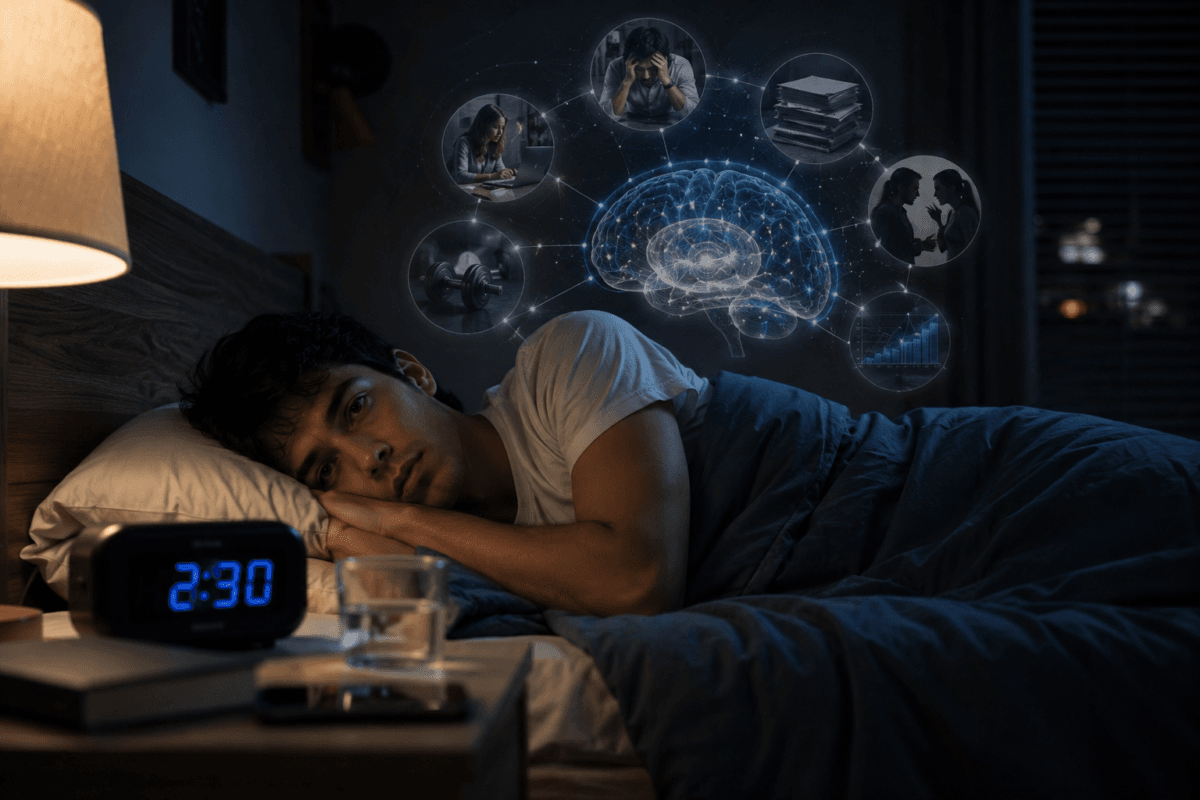
Yet sleep affects nearly every system involved in a psychedelic experience.
Poor sleep may influence:
- emotional regulation
- concentration
- anxiety
- stress tolerance
- memory
- attention
- decision-making
Someone who is physically exhausted may respond differently to unusual sensations than someone who feels mentally refreshed.
Although research specifically examining sleep and psilocybin remains limited, neuroscience consistently shows that adequate sleep supports healthier emotional processing and cognitive flexibility.
That makes sleep another important piece of understanding why psilocybin experiences differ.
Your Personal History Doesn’t Stay in the Past
Every individual carries a unique emotional history.
Some memories remain vivid.
Others seem forgotten until something unexpectedly brings them back into awareness.
During psychedelic experiences, ordinary patterns of attention can change.
As a result, seemingly unrelated memories, emotions, or personal themes may become unexpectedly meaningful.
For one person, childhood memories may dominate the experience.
Another may spend hours reflecting on current relationships.
Someone else may focus entirely on creativity, purpose, or future goals.
This variation reflects the deeply personal nature of psychedelic experiences.
The substance itself doesn’t choose the subject matter.
Instead, it interacts with whatever emotional and cognitive material already exists within the individual.
Personality Influences Interpretation
Psychologists have long studied personality because it affects how people respond to uncertainty, relationships, stress, and change.
Researchers are now exploring how personality may also influence psychedelic experiences.
Traits currently being investigated include:
- openness
- curiosity
- emotional flexibility
- resilience
- neuroticism
- tolerance for uncertainty
Importantly, these traits do not predict whether someone will have a “good” or “bad” experience.
Instead, they may influence how unfamiliar emotions or perceptions are interpreted.
For example, two people may encounter identical feelings of uncertainty.
One interprets them as curiosity.
The other experiences them as fear.
The sensation may be similar.
The meaning attached to it is different.
Physical Health Quietly Shapes the Experience
Mental health receives significant attention in psychedelic discussions.
Physical health deserves attention too.
General health influences how people experience almost everything—including altered states of consciousness.
Relevant factors may include:
- hydration
- nutrition
- chronic illness
- fatigue
- exercise habits
- hormonal changes
- cardiovascular health
Researchers continue investigating how these variables influence psychedelic experiences, but maintaining overall health supports emotional resilience and physiological stability regardless of whether psychedelics are involved.
Physical wellbeing doesn’t determine psychological outcomes.
It contributes to the conditions in which those outcomes occur.
Medications Can Change the Picture
Another important reason why psilocybin experiences differ is that individuals often have different medical histories.
Prescription medications may affect neurotransmitters, emotional regulation, sleep, alertness, and cardiovascular function.
Because psilocybin also interacts with neurological systems, researchers continue studying how medications influence:
- subjective effects
- duration
- intensity
- therapeutic outcomes
- safety
This is one reason clinical trials carefully screen participants before treatment begins.
Outside research settings, individuals should never assume that medication interactions are predictable or insignificant.
For evidence-based information about psilocybin research and important safety considerations, visit the National Center for Complementary and Integrative Health (NCCIH)
Culture Shapes How We Explain Our Experiences
An experience doesn’t arrive with its own explanation.
People understand what happens through the beliefs, language, and cultural frameworks they already possess.
Someone with a religious background may describe spiritual revelation.
Another person may interpret similar emotions psychologically.
Someone trained in neuroscience may explain the same experience using brain function rather than symbolism.
None of these interpretations automatically invalidate the others.
They simply demonstrate that meaning-making continues after the psychedelic experience itself.
Researchers increasingly recognize that culture influences not only what people experience but also how they remember and describe it afterward.
Why Memory Is Never Completely Objective
One fascinating aspect of psychedelic experiences is how they’re remembered.
Immediately afterward, many experiences feel unquestionably meaningful.
Weeks later, interpretations sometimes change.
Months later, entirely different insights may emerge.
Memory isn’t a perfect recording device.
Psychologists have shown that memory involves reconstruction rather than replay.
People naturally organize experiences into stories.
That doesn’t make psychedelic insights false.
It simply reminds us that interpretation evolves over time.
Reflecting gradually often produces a more balanced understanding than rushing to explain everything immediately.
Clinical Research Looks Different From Real Life
Many headlines about psilocybin focus on encouraging results from clinical research.
Those studies are valuable.
They’re also highly controlled.
Participants often receive:
- medical screening
- psychological assessment
- preparation sessions
- professional supervision
- structured environments
- post-session integration
These conditions differ substantially from unsupervised settings.
Because of this, researchers caution against assuming that findings from therapeutic studies automatically apply to every real-world experience.
To learn more about ongoing psychedelic research, visit the Johns Hopkins Center for Psychedelic and Consciousness Research
One Experience Doesn’t Predict the Next
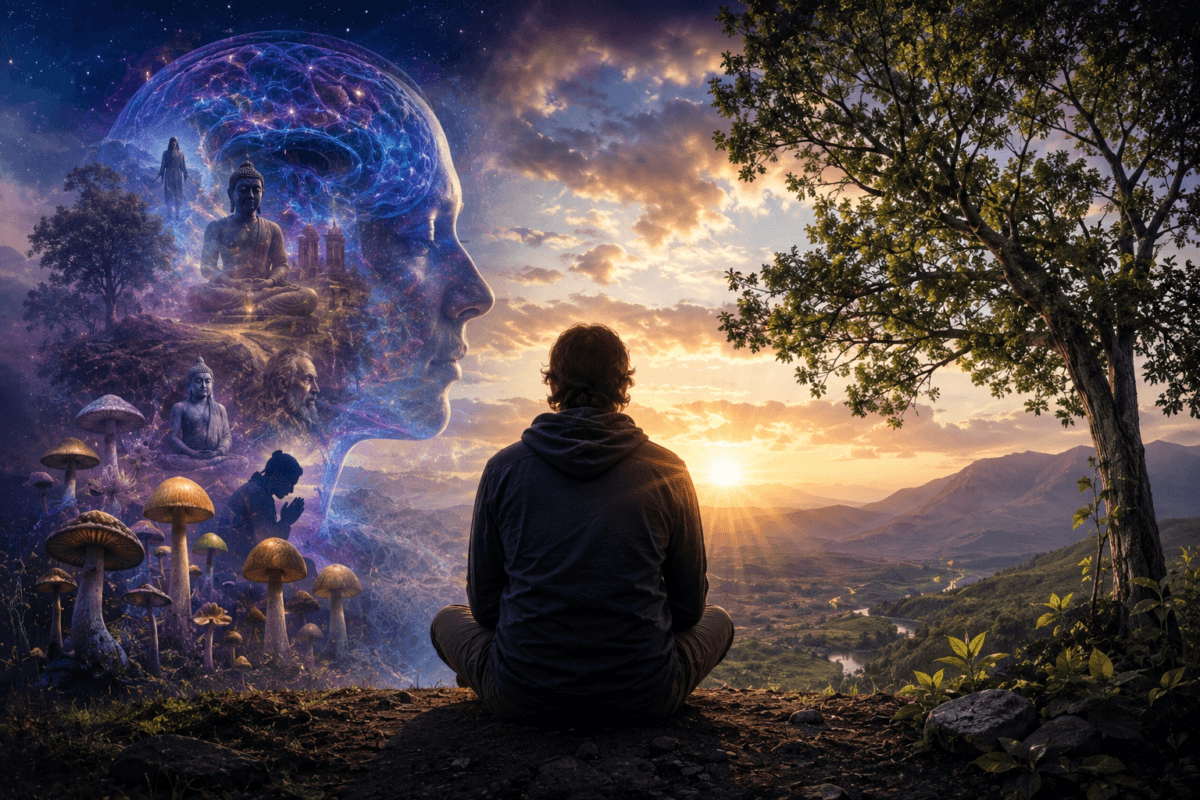
Even the same person can have remarkably different experiences across separate occasions.
That surprises many people.
Someone who previously felt calm may later experience uncertainty.
Someone whose first experience focused on relationships may later become preoccupied with creativity, mortality, or personal identity.
Life changes.
Stress changes.
Health changes.
Relationships change.
Expectations change.
Because people themselves change, psychedelic experiences often change with them.
This reinforces one of the central ideas throughout this article:
Psilocybin doesn’t produce experiences in isolation.
It interacts continuously with the changing person experiencing it.
Integration Matters as Much as the Experience
Although much of the conversation focuses on what happens during a psychedelic experience, what happens afterward can be equally important.
Taking time to reflect on emotions, thoughts, and personal insights may help people better understand what felt meaningful and what remains uncertain.
Integration doesn’t require finding immediate answers. Instead, it encourages thoughtful reflection over time.
If you’re looking for practical guidance on preparing for and thinking critically about psilocybin experiences, you may also find our article Before You Try Psilocybin Mushrooms: 10 Personal Checkpoints Worth Considering helpful before continuing your research.
Looking Ahead
Understanding the biological, psychological, and environmental factors that shape psychedelic experiences reveals why comparison is often misleading.
The more researchers learn, the clearer it becomes that no single variable can fully explain why one person’s experience differs from another’s.
Common Myths About Psilocybin Experiences
As public interest in psychedelics continues to grow, so do misconceptions. While personal stories can be informative, they don’t replace scientific evidence or explain the wide range of factors that influence individual experiences.
Let’s examine some of the most common myths.
Myth 1: The Same Dose Produces the Same Experience
This is perhaps the most persistent misunderstanding.
As we’ve explored throughout this article, dosage is only one variable among many. Genetics, mental state, physical health, sleep, expectations, environment, personality, and life experiences all contribute to how someone experiences psilocybin.
The same dose may feel profoundly different from one individual to another—or even for the same person at different points in life.
Myth 2: A Challenging Experience Is Always a Bad Experience
People often describe psychedelic experiences as either “good trips” or “bad trips.”
Reality is usually more nuanced.
Some experiences involve confronting uncomfortable emotions, unresolved memories, or deeply held beliefs. While these moments can feel difficult, they are not automatically harmful or meaningless.
Likewise, a pleasant experience isn’t automatically transformative.
Researchers increasingly avoid simplistic labels because psychedelic experiences exist on a broad emotional spectrum rather than fitting neatly into positive or negative categories.
Myth 3: Visual Effects Are the Most Important Part
Popular culture often portrays psychedelics as primarily visual experiences.
Although visual changes can occur, they represent only one aspect of what people may experience.
Many participants in clinical studies describe emotional insight, changes in perspective, increased self-reflection, or altered patterns of thinking as more significant than visual phenomena.
Measuring the value of an experience solely by its visual intensity overlooks much of what researchers are actually studying.
Myth 4: Psilocybin Affects Everyone the Same Way
Current evidence suggests the opposite.
Modern neuroscience continues to demonstrate substantial differences in how individuals process emotions, respond to stress, regulate attention, and interpret experiences.
Because no two people share identical biological and psychological histories, it is unrealistic to expect identical psychedelic experiences.
Understanding this helps explain why psilocybin experiences differ without reducing those differences to a single cause.
What Researchers Still Don’t Fully Understand
Despite renewed scientific interest, many important questions remain unanswered.
Researchers continue investigating topics such as:
- Why some individuals report stronger subjective effects than others.
- How genetics may influence psychedelic responses.
- Why certain emotional themes repeatedly emerge during experiences.
- Which biological markers may predict therapeutic outcomes.
- How long-term psychological changes develop after carefully supervised treatment.
- The relationship between brain connectivity and subjective experience.
- The most effective approaches to preparation and post-session integration.
The growing body of research is encouraging, but many findings are still preliminary. Scientists continue emphasizing the importance of careful study design, larger participant groups, and long-term follow-up before drawing broad conclusions.
For readers interested in current scientific literature, the U.S. National Library of Medicine’s PubMed provides access to peer-reviewed research on psilocybin and related topics:
Why Comparison Often Prevents Understanding
One of the most valuable lessons from modern psychedelic research is that comparison can be misleading.
People naturally compare experiences.
We compare achievements, careers, relationships, and personal milestones.
Psychedelic experiences are no different.
Yet comparing one person’s journey to another’s often creates unrealistic expectations.
Someone whose experience was quiet and reflective may feel disappointed after reading dramatic stories online.
Another person may believe something went wrong simply because their experience didn’t resemble what they expected.
The reality is that every experience unfolds within a unique combination of biology, psychology, personal history, and environment.
Recognizing those differences encourages curiosity instead of judgment.
Rather than asking whether an experience matched someone else’s, it may be more meaningful to ask what it revealed about the individual who experienced it.
Key Takeaways
If there’s one message supported by both current research and clinical observation, it’s this:
Psilocybin does not produce identical experiences because people are not identical.
Every experience reflects an interaction between the compound and the person experiencing it.
That interaction is influenced by numerous interconnected factors, including:
- Brain biology
- Genetics
- Physical health
- Personality
- Emotional wellbeing
- Expectations
- Sleep quality
- Stress levels
- Environment
- Personal history
- Cultural background
- Interpretation after the experience
Understanding these influences helps explain why psilocybin experiences differ without oversimplifying a remarkably complex area of neuroscience and psychology.
Frequently Asked Questions
Why do two people have different psilocybin experiences?
Individual biology, emotional state, environment, expectations, health, and personal history all contribute to how psilocybin is experienced. No single factor fully explains the differences.
Does body weight determine a psilocybin experience?
Body weight alone is not considered a reliable predictor of subjective psychedelic experiences. Researchers continue studying the many variables that influence individual responses.
Does sleep affect a psychedelic experience?
Although research is still developing, sleep influences emotional regulation, attention, and cognitive performance, making it a potentially important factor.
Why do some people experience stronger emotions?
Emotional responses vary depending on personality, psychological state, life experiences, expectations, and numerous biological differences between individuals.
Can the same person have different experiences each time?
Yes. Changes in health, stress, environment, relationships, preparation, and life circumstances may contribute to different experiences over time.
Does environment really matter?
Yes. Clinical research consistently emphasizes the importance of supportive settings, preparation, and psychological safety when studying psychedelics.
Can researchers predict someone’s experience?
Not with certainty. While researchers understand many contributing factors, predicting the exact nature of an individual’s psychedelic experience remains impossible.
Where can I learn more before researching psilocybin?
If you’re beginning your research, our guide Before You Try Psilocybin Mushrooms: 10 Personal Checkpoints Worth Considering provides practical questions and considerations that can help you approach the topic more thoughtfully.
Conclusion
As psychedelic science continues to evolve, one conclusion has become increasingly clear: there is no such thing as a “standard” psilocybin experience.
Every journey reflects a unique interaction between the brain, the body, personal history, emotional state, expectations, and the surrounding environment. While dosage remains important, it tells only part of the story.
Recognizing this complexity encourages a more thoughtful and evidence-based perspective. Instead of comparing one person’s experience with another’s, it is more useful to appreciate the many variables that shape every individual journey.
Researchers continue uncovering new insights into how psilocybin affects perception, emotion, and cognition, but many questions remain unanswered. That uncertainty is not a weakness of the science—it reflects the extraordinary complexity of the human mind.
As research expands, approaching the topic with curiosity, critical thinking, and respect for the evidence will remain far more valuable than searching for simple explanations.
For readers who want to stay informed about the latest evidence, the National Institute on Drug Abuse (NIDA) provides regularly updated information on psychedelic research, public health, and ongoing scientific developments: